
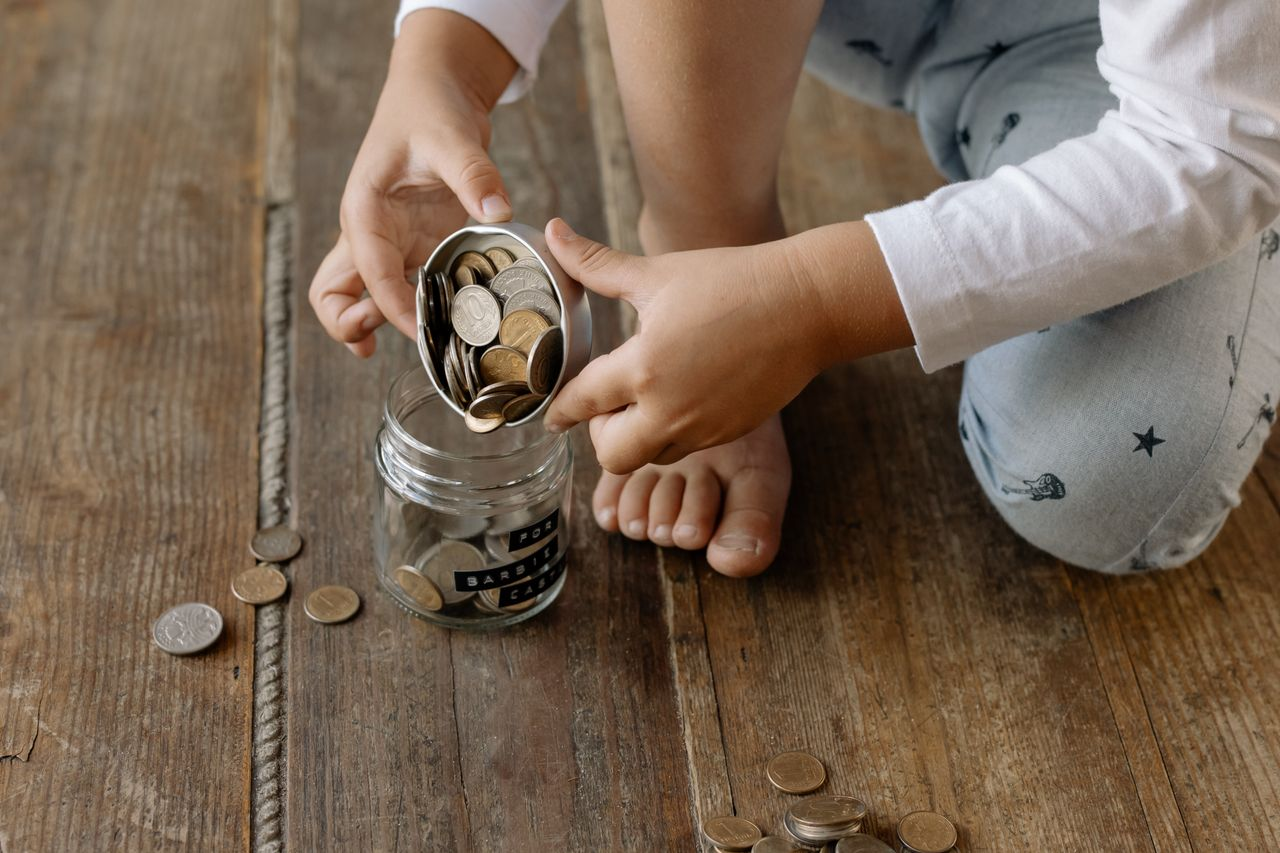
When should you start teaching kids about money? Most parents assume it’s something to introduce in elementary school. But the truth is, teaching kids about money can start in preschool, in simple, natural, age-appropriate ways.
Not with lectures.
Not with complex math.
Not with pressure.
Just exposure, conversation, and hands-on learning. As a Level 3 Early Childhood Educator and mom of two, I’ve seen how early experiences shape long-term confidence. That’s especially true when it comes to life skills like money.
That’s exactly why I created this Preschool Learning Money Printable, to make teaching kids about money feel simple and developmentally appropriate for ages 2–5. Let’s break down why starting early matters and what it can actually look like.
Why Start Teaching Kids About Money in Preschool?
At ages 3–5, children are:
- Learning number recognition
- Developing fine motor skills
- Understanding cause and effect
- Beginning to grasp concepts like “more” and “less”
Money naturally fits into all of these. When we start teaching kids about money at this age, we aren’t trying to create financial experts. We are building familiarity.
Preschoolers can understand:
- Coins have names
- Different coins have different values
- We use money to buy things
- We can choose to save money
- Money can grow over time
These simple foundations reduce confusion later. When money isn’t mysterious, it isn’t intimidating.
What Preschoolers Can Realistically Learn About Money
It’s important to keep expectations age-appropriate.
Preschoolers do not need to understand:
- Interest rates
- Stock markets
- Investment risk
But they can understand:
- Sorting coins
- Matching values
- Saving toward a goal
- The difference between needs and wants
- That patience pays off
Teaching kids about money at this stage is about exposure, not mastery. Repetition and play are key. That’s why hands-on activities work so well.
What Makes an Effective Preschool Money Resource?
When teaching kids about money in early childhood, activities should be:
✔ Visual
✔ Interactive
✔ Simple
✔ Repetitive
✔ Developmentally appropriate
Worksheets alone aren’t enough.
Preschoolers learn best through:
- Sorting
- Matching
- Coloring
- Pretend play
- Short, consistent practice
That’s why this Preschool Learning Money Printable includes:
- Canadian coin identification pages
- “How many coins make $1?” activities
- Coin sorting mats
- Bigger vs. smaller comparisons
- Save, Spend, Share worksheets
- Needs vs. Wants sorting
- A simple savings goal tracker
- An introduction to investing
- A visual explanation of how money grows over time
It’s structured exposure, not overwhelm.
Teaching Saving Without Pressure
One of the most powerful parts of teaching kids about money is helping them understand that they don’t have to spend it immediately.
The Save / Spend / Share concept introduces:
- Intentional choices
- Patience
- Goal setting
- Generosity
You can make this tangible by using three jars at home. When children physically move coins into “Save,” they start connecting effort with progress. Adding a simple coloring tracker helps preschoolers visually see growth, which builds motivation. Even small amounts matter at this age.
Introducing Investing in a Preschool-Friendly Way
Most preschool resources stop at coins. But children already understand growth.
They know:
- Seeds grow into plants
- Babies grow into adults
- Small things become bigger over time
So we use that same concept when teaching kids about money. If we plant money (save or invest it), it can grow. The printable’s investing introduction page uses:
Seed → Plant → Tree
Coin → Bigger stack → Bigger stack
No percentages.
No complicated math.
Just the idea of growth.
The compound growth visual shows:
$10
Becomes $11
Becomes $12
This introduces long-term thinking without overwhelming young learners. It plants a seed, literally and figuratively.

Why Early Financial Exposure Matters Long-Term
Studies show that many money habits begin forming in early childhood.
Children who grow up with healthy money conversations often:
- Feel more confident handling money later
- Understand delayed gratification
- Develop stronger budgeting habits
- Experience less financial stress
Teaching kids about money early doesn’t mean pushing adult responsibilities onto them. It means normalizing the topic. When financial conversations feel calm and familiar at home, children are more likely to develop confidence rather than anxiety.
How to Use This Printable at Home
You don’t need a formal lesson plan to start teaching kids about money.
Here’s a simple approach:
Step 1: Start with coin recognition.
Use real Canadian coins alongside the printable pages.
Step 2: Practice sorting and matching.
Keep it playful and short.
Step 3: Introduce Save / Spend / Share.
Use jars or envelopes to make it real.
Step 4: Talk about growth.
Use the plant analogy to explain investing.
Keep sessions short. 5–10 minutes is enough for preschoolers. Consistency is more important than duration.
A Note for Parents
Every family’s financial situation is unique. This printable is designed for educational purposes, to support teaching kids about money in an age-appropriate way.
When it comes to opening savings or investment accounts for your children, consider speaking with a qualified financial professional to determine what works best for your family.
If you are exploring simple savings or investment options in Canada, I personally use and recommend Wealthsimple for its accessible platform and account options.
(Disclosure: This may include an affiliate link, which helps support the creation of future educational resources at no additional cost to you.)
The Bigger Picture
Teaching kids about money in preschool isn’t about creating tiny investors.
It’s about:
- Building familiarity
- Encouraging patience
- Developing healthy habits
- Making financial conversations normal
It starts small.
With coins.
With sorting.
With saving a few dollars.
With understanding that money can grow over time.
And those early seeds grow into lifelong confidence.
If you’re ready to begin teaching kids about money in a simple, structured way, you can explore the Preschool Learning Money Printable here:
Start small. Stay consistent. Keep it simple. That’s how strong money habits begin.